


Conservative treatment of spinal canal stenosis
In the absence of pronounced neurological changes, when complaints are limited to pain in the legs and lower back, and seeking medical help is timely, it is possible to use the following conservative methods for treating stenosis:
- Anti-inflammatory drugs to eliminate pain and inflammation, reduce tissue swelling;
- Muscle relaxants to reduce muscle tension in the lumbar region;
- Medication blockade with intravertebral administration – hormonal drugs and anesthetics quickly and effectively relieve pain at the site of its occurrence;
- Vascular agents that improve blood flow in the affected vessels;
- Back massage sessions;
- A diverse range of physiotherapy – exposure to currents, electrophoresis, magnetotherapy, mud treatment;
- Exercise therapy – a set of therapeutic exercises to improve health and reduce pain.
The complex use of all these techniques gives a positive result. The selection of a therapy program should be carried out separately in each case, taking into account the existing contraindications.
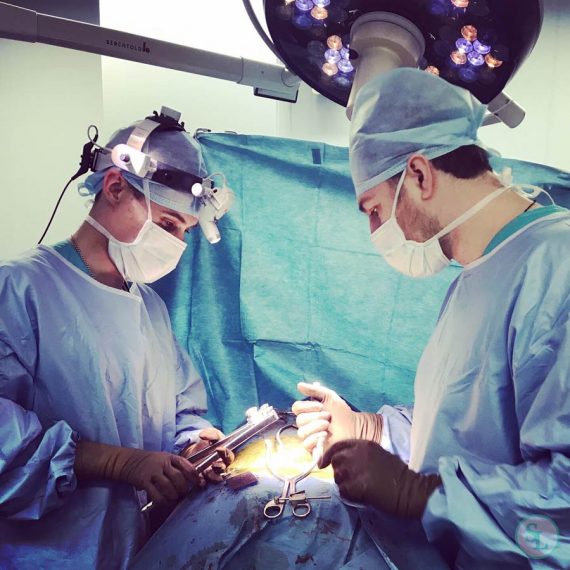
Surgery of spinal canal stenosis
The purpose of the operation is to exclude compression of the roots of the spinal nerves. Today, large open surgeries and endoscopic surgeries are performed when tissue incisions are minimal.
The following techniques are most commonly used:
- Decompression laminectomy – expansion of the spinal canal by removing individual elements – acantha, part of the ligamentum flavum, and the arch of the vertebra. The method is traumatic;
- Stabilizing surgery to enhance the supporting function of the spine – the application of metal braces after the expansion of the spinal canal;
- Microsurgical decompression and the use of fixation systems to strengthen the spinal column after elimination of stenosis; the function of flexion and extension of the spine is preserved;
- If the source of spinal stenosis is a herniated disc, then microdiscectomy or laser vaporization is performed, possibly in combination with laminectomy.
The type of surgical intervention is chosen to take into account the clinical picture in each individual case. As a rule, the use of surgical methods ensures the patient’s recovery. For the best effect, it is important to behave correctly in the postoperative period, follow the recommendations of doctors and carry out rehabilitation measures.