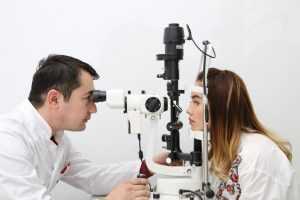
Biomicroscopy of the eye is a diagnostic method of examining the tissues and optical media of the eyeball by creating a sharp contrast between an unlit and an illuminated area. The study is carried out using a special device – a slit lamp
Research objectives
With eye biomicroscopy, the doctor can assess:
- condition of the eyelids and conjunctiva;
- the state of the cornea: its thickness, structure, nature, and location of the identified pathological changes;
- the state of the fluid located in the anterior chamber of the eye (between the iris and cornea);
- anterior chamber depth parameters;
- condition of the iris;
- the state of the lens;
- the state of the anterior part of the vitreous body: its transparency, turbidity, the presence of blood or deposits.
Biomicroscopy of the eye can be used to diagnose the following pathologies:
- conjunctival diseases of various origins (cysts or tumors caused by allergic or inflammatory processes);
- inflammation, trauma, edema, and swelling of the eyelids;
- scleral pathologies: structural anomalies, keratitis, corneal dystrophy, scleritis, etc.;
- inflammatory processes and anomalies in the structure of the iris;
- glaucoma;
- cataract;
- corneal foreign bodies;
- various injuries;
- some endocrine diseases that complicate the organs of vision.
- In addition, eye biomicroscopy is carried out to assess the effectiveness of treatment, prepare for surgical operations and analyze the results of previous interventions.
Contraindications
Biomicroscopy of the eye has practically no contraindications. Such a study cannot be performed only in the following cases:
- severe forms of mental illness;
- alcoholic or drug intoxication.
How the research is carried out:
- Biomicroscopy of the eye can be performed in a specially equipped ophthalmologist’s office. Preparation of the patient for such a study is not required.
- Depending on the purpose of the examination, the patient may undergo the following procedures:
- If necessary, study the state of the lens or vitreous body. 15 minutes before the procedure, for maximum dilation of the pupil, the eyes are instilled with a solution of Tropicamide (adults – 1%, children under 6 years old – 0.5% solution).
- On examination of the cornea. A fluorescein dye solution is instilled into the eye being examined. After that, the dye is washed off with drops and an inspection is carried out. If the integrity of the cornea is violated, the remains of the dye solution are revealed in the areas of its damage.
- If necessary, remove a foreign body. To perform a surgical intervention, a solution of a local anesthetic (Lidocaine) is instilled into the eye before the examination. Before carrying out such operations, the doctor must make sure that there is no allergic reaction to the drug used.
The eye biomicroscopy procedure is performed in the following sequence:
- The patient sits down in front of the doctor and places his chin on special support, and rests his forehead against a special bar. During the study, he should remain immobile and try to blink as little as possible. If the examination is carried out for a child under 3 years old, then the procedure is recommended in a state of deep sleep or in a horizontal position.
- The technician sets up the slit lamp and examines the necessary structures of the eye. For each section of the eyeball, the required lighting option is applied.